
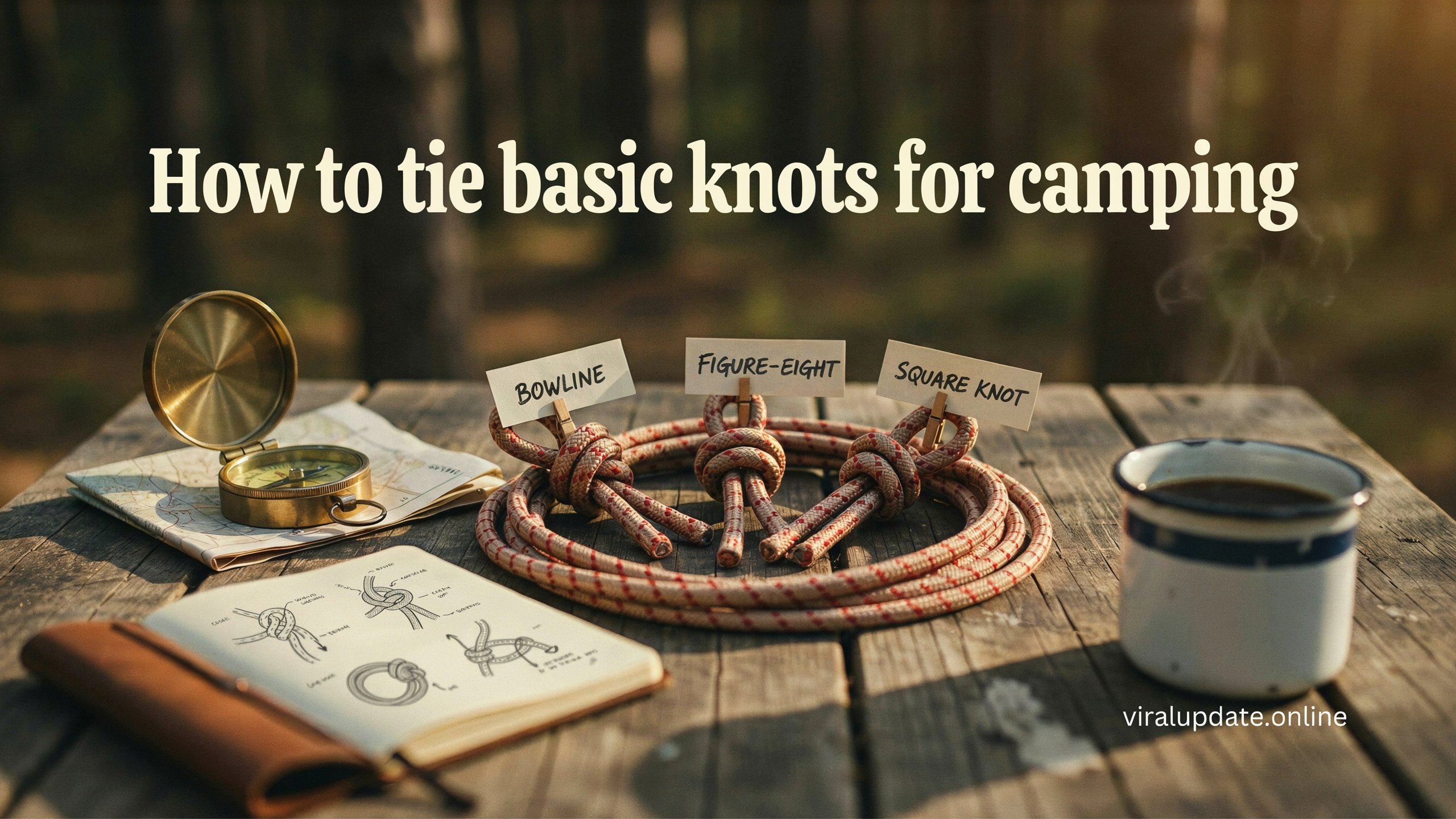
Camping is one of the most popular outdoor activities in America. When you are out camping, you need to set a tent which requires some different knots or need to secure a tarp, or maybe even hang food so as not to let the wildlife carry it off with them, knowing how to tie basic knots for camping can make your trip safer and more fun.
This guide teaches you the topmost camping knots, how to tie them stepwise, when and where you should apply them, common mistakes that people make with knot-tying along with practical tips to help you master these quickly.
Why Learning Basic Camping Knots Is Important
Being able to tie knots properly gives a few advantages when you go for camping.
Better Safety
Knots help us to secure our shelters, tarps and gear from loosening up during bad weather or strong winds.
Easier Campsite Setup
Knowing how to tie the right knots could quicken your set ups for tents and shelters.
Improved Gear Organization
Knots are useful to tie down gear, bundling supplies, or keeping arranged in a campsite.
Useful Survival Skill
Knot-tying is important for camping, also hiking, boating, fishing and emergency cases.
Greater Confidence Outdoors
A few basic knots improve newcomers’ comfort level while in the great outdoors.
Common Types of Rope Used for Camping
Before we actually study the knots, it is helpful to get acquainted with the ropes mostly used by campers.
Nylon Rope
In addition, nylon rope is durable and can carry a large load as well.
Best Uses
- Hanging heavy gear
- Shelter building
- General campsite use
Paracord
Paracord is one of the lightest, most useful and versatile cord type out there.
Best Uses
- Tent guy lines
- Emergency repairs
- Survival situations
Polyester Rope
Polyester has high resistance to water absorption and UV degradation.
Best Uses
- Outdoor shelters
- Tarp setups
- Long-term outdoor use
Utility Cord
As for the utility cord, this is ideal for lighter camping jobs.
Best Uses
- Organizing gear
- Clotheslines
- Lightweight shelters
Essential Camping Knots Every Beginner Should Know
Square Knot
The easiest knot of most to be practised is the square knot and it can easily bond two ropes with same size.
Best Uses
- Tying bundles
- Securing blankets
- Joining ropes temporarily
How to Tie a Square Knot
Take the running end on the right and overtake the slack or standing part of rope on left.
Bring it underneath.
Loop the left rope around the right rope.
Pull both ends tightly.
This knot is straightforward but it should not be used for loads of any weight.
Bowline Knot
Bowline It makes a loop that does not slip under the load.
Best Uses
- Hanging equipment
- Securing tarps
- Rescue situations
How to Tie a Bowline Knot
We will put a loop of rope roughly the size of our hand at the end.
Thread the end of the rope through this new loop.
Go around the standing part of the rope.
Reinstate the extreme end via the cycle.
Pull tight.
Often outdoor enthusiasts refer to the bowline as “The King of Knots” due to its reliability.
Taut-Line Hitch
This knot can be adjusted by simply pulling on the free end, making the taut-line hitch one of the most useful camping knots.
Best Uses
- Tent guy lines
- Tarp shelters
- Adjustable rope tension
How to Tie a Taut-Line Hitch
Loop the rope around an anchor point.
Wrap the standing line around twice.
Add one loop on the outside.
Tighten the knot.
It slides free easily but holds very tight when loaded.
Clove Hitch
The clove hitch allows you to tie off a rope quickly to a tree, pole, or post.
Best Uses
- Hanging lanterns
- Attaching tarps
- Temporary rope attachments
How to Tie a Clove Hitch
Wrap the rope around a pole.
Cross over the standing line.
Wrap around again.
Now slide the end of the rope under that last loop.
Pull tight.
Clove hitch is quick to tie and easier to untie.
Figure Eight Knot
Figure eight knotA figure eight knot prevents the ends of the rope from passing through any gaps.
Best Uses
- Climbing
- Safety applications
- Rope management
Instruction Guide: Tying a Figure Eight Knot
Create a loop.
Take the end of the rope behind itself.
Return it via the loop.
Pull firmly.
The completed knot appears in the shape of the number eight.
How Camping Knots Are Used Around the Campsite
Various knots are used for varying tasks on a camping journey.
Tent Setup
Taut-line hitch helps keep tent lines tight & adjustable.
Hanging Food Bags
A bowline knot is used to create secure loops for hanging food.
Building a Tarp Shelter
Together with the clove hitches and taut-line hitches, they are used to tie up strong shelter.
Organizing Equipment
Square knots are used to tie ropes, cords and camping supplies together.
Emergency Situations
Bowline and figure eight knots are a safe bet, when it comes to safety.
Real-World Example
Jake is a Colorado native, an avid outdoorsman who often camps in the Rocky Mountains. On one occasion camping, winds started loosening his tent lines at night.
To avoid this of continually altering stakes, Jake installed taut-line hitches on every single guy line. The knots were adjustable, so he could quickly tighten the tent without re-setting the rig.
As a result:
- The tent held firm during the night.
- His gear was well protected from the elements.
- In at least a partial wake of that experience, the camping trip was far more comfortable.
These are practical knots you will find useful and actually will put to use in a camping situation.
Common Mistakes Beginners Make
Using the Wrong Knot
Different knots serve different purposes. Using an improper knot can cause you equipment to fail.
Leaving Knots Too Loose
If there is tension on a loose knot it can slip.
Using Damaged Rope
An old or frayed rope might snap unpredictably.
Not Practicing Enough
With practices, knot-tying gets a lot easier.
Overcomplicating Simple Tasks
So many new anglers attempt the complicated knots when the a simple knot would work perfectly.
How To Learn Camping Knots More Faster!
Practice at Home
Practice some basic knots for a couple of minutes each day.
Use Colored Rope
The bright-colored rope adds ease of tracking each step.
Learn One Knot at a Time
Conquer one knot before passing on the subsequent knot.
Watch Rope Tension
Proper tension improves knot security.
Carry Paracord
Not to mention Paracord is cheap, light weight and a great practice material.
Pros and Cons of Learning Basic Camping Knots
Pros
Improves Outdoor Safety
Tight knots can help keep accidents and equipment failures at bay.
Saves Time
There is less time spent at the campsite when you tie knots correctly.
Requires Minimal Equipment
You only requires rope, and a bit of practice.
Useful Beyond Camping
This skill set is transferable to walking, fishing, boating and emergencies.
Builds Confidence
Having fundamental knot skills can ease several camping and hiking challenges.
Cons
Requires Practice
For beginners knots learnt may be time-consuming to remember.
Some Knots Can Slip
Knots, which have been tied incorrectly, can let go under load.
Different Situations Need Different Knots
More info here: Not every knot is right for every job.
Weather Can Affect Rope Performance
Rain and moisture may affect rope tension.
Learning Takes Patience
Learning multiple knots requires repetition and however time to learn them.
Frequently Asked Questions
Which knot is the most useful for camping?
The taut-line hitch is probably the most used of the three, because you can slide knot and easily adjust your tent lines and tarps.
Which knots should a beginner learn?
All you need is five primary knots to get by most camping situations.
Best Rope for Camping: A Guide
Paracord and nylon rope are some of the strongest types of synthetic ropes available.
How hard are camping knots to learn?
No. Basic camping knots can be learned with a little practice and repetition.
Conclusion
Learning how to tie basic knots for camping is one of camps most developing essential outdoor skills for beginners. Simple knots (the square knot, the bowline, taut-line hitch, clove hitch, and figure eight knot) can allow you to safely secure equipment or build shelters for both safety and useful stressing on camp grounds. However, practice with these knots can make them second nature and will help to facilitate an enjoyable experience on every camping trip. Whether going for a weekend camping trip or preparing yourself for the long haul, having some simple knots in your skill set will pay off you with for years to come.