
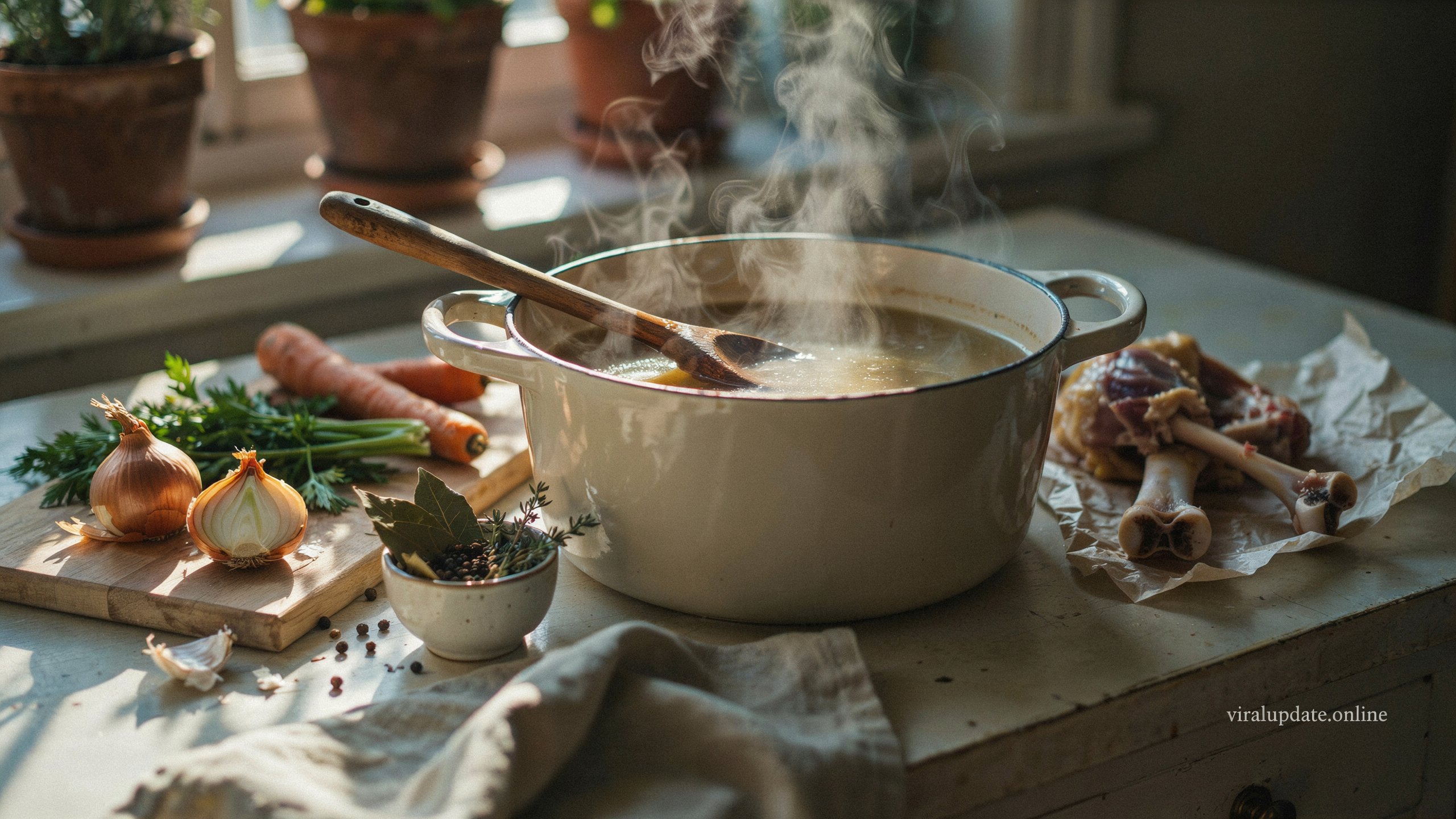
Now, a big part of making a great soup is having really good stock. better for you, and even less expensive than most commercial alternatives. It gives you more control over the ingredients, the sodium and the flavor.
When you are making chicken noodle soup, vegetable soup, beef stew, gravy or sauces – a great base for the dish is homemade soup stock. And even the best part is, you can use leftover vegetable scraps and bones.
This guide teaches you exactly how to make soup stock, what ingredients you need, step-by-step instructions including tips & tricks on pitfalls to avoid followed by the benefits of making your own stock (with a below example from the real world), along with all questions answered.
What Is Soup Stock?
Soup stock, on the other hand is a broth that you make by simmering bones and sometimes meat, together with veggies and herbs/spices in water. While cooking, the ingredients release their natural essence, minerals and collagens which gives a depth of flavor to the bases of soups and for many other recipes.
Since stock is full of bones — and not as meats like broth — the body is more full and its texture much richer.
Advantages of Home-Made Soup Stock
Richer Natural Flavor
Store-bought stocks can never come close to the rich, umami flavor of homemade.
Healthier Ingredients
You know how much salt, herbs and seasonings go in your stock.
Saves Money
Recycling chicken bones, beef bones, turkey carcasses or vegetable waste reduces food waste and lowers grocery bills.
More Versatile
Soup stock can be used in soup, sauce, stew, gravy or rice pasta casserole.
No Artificial Preservatives
Since homemade stock is made of only the ingredients you want it to be, it’s going to be much cleaner.
Ingredients You’ll Need
Bones or Meat
Choose one of the following:
Chicken bones
Beef bones
Turkey bones
Fish bones
Vegetables
Common vegetables include:
Onion
Carrots
Celery
Garlic
Herbs
Good examples are fresh or dried herbs, including:
Parsley
Thyme
Bay leaves
Whole Spices
Black peppercorns
Cloves (optional)
Water
As cooking progresses, the cold water assists in gradually pulling flavor from the matter.
How to Make Soup Stock
Step 1: Prepare the Ingredients
Clean the vegetables well and cut them into large pieces. If using leftover bones, cut off any excess fat if necessary.
Step 2: Roast the Bones
To roast them for 30–40 minutes. roast them before making beef or chicken stock. It is optional that this step will create a deeper richer flavor.
Step 3: Put Everything in a Big Pan
In a large stockpot, add bones, vegetables, herbs & spices and garlic.
Step 4: Add Cold Water
Add enough chilled water to completely submerge all the contents by 1 inch.
Step 5: Gently To a Boil
Place the pot on a low heat and slowly bring it to a soft simmer. Don’t let it reach a rolling boil — the bubbles will cloud the stock.
Step 6: Skim the Foam
Foam may form on the surface of the stock as it cooks. Scoop it out with a spoon to ensure your stock is cleaner and clearer.
Step 7: Simmer Until Flavorful
Recommended cooking times:
Chicken stock: 3–4 hours
Beef stock: 6–8 hours
Vegetable stock: 45–60 minutes
Step 8: Strain the Stock
Pass the finished stock through a fine-mesh sieve into a clean bowl or pot.
Step 9: Cool and Store
After straining, let the stock cool completely before storing in airtight containers in the refrigerator or freezer.
Homemade Soup Stock Tips
Use Fresh Ingredients
On the other hand, fresh vegetables and herbs have the best flavor.
Don’t Add Too Much Salt
It is easier to add salt once you make an individual recipe years later than it is to take salt out.
Keep the Heat Low
A long gentle simmer will brew flavor and clarify the broth.
Save Vegetable Scraps
Peels from carrots, leaves of celery, onion skins, and woody stems from herbs can add flavor.
Remove Fat After Cooling
Solidified fat can be very easily skimmed off the top once refrigerated.
Common Mistakes to Avoid
Boiling Instead of Simmering
Boiling the stock at a furious pace will make it cloudy and change its flavor for the worse.
Over-Salting
The stock is just lightly seasoned so it can be used in many, many different dishes.
Using Spoiled Ingredients
Always Implementation of fresh veggies and properly chilled bones or meat.
Forgetting to Skim the Foam
With the goal of removing impurities an appearance, flavor is also improved.
Cooking Vegetable Stock Too Long
Slowly cooked vegetables become bitter.
Real-World Example
Michael from Ohio loves to cook for his family every weekend. He saves leftover roasted chicken wings and vegetable trimmings in freezer bags, instead of trashing them.
Each Sunday, he adds the ingredients to a heavy stockpot with onions, carrots, celery, garlic, parsley, bay leaves and peppercorns. Once it has simmered for approximately four hours, he then strains the stock and freezes it in meal-sized containers.
Now, when he cooks chicken noodle soup, rice and homemade gravy, he uses his stock. His family likes the thicker taste, and he buys fewer boxes of stock from the store.
Homemade Soup Stock Pros and Cons
Pros
Rich, Homemade Flavor
More flavourful than most store-bought kinds.
Budget-Friendly
Utilizes leftover ingredients that may otherwise go to waste.
Healthier Choice
Weighs less preservatives and synthetic ingredients.
Versatile
Great in soups, sauces, rice, pasta and stews.
Easy to Freeze
Also can be saved for porce meals in the future.
Cons
Time-Consuming
It takes hours to make a good stock.
Storage Space Needed
Refrigerator or freezer space for larger batches.
Requires Straining
You must strain the solids out before using stock.
Short Refrigerator Life
Homemade stock usually only lasts 3–4 days before it will go bad in the fridge.
Frequently Asked Questions
How long to simer homemade soup stock?
A stock for chicken generally requires 3–4 hours, beef takes 6–8 hours, and vegetable is around the 45–60 min mark.
Can I freeze my homemade sou√p stock?
Yes. Store it in sealed containers or freezer bags, and freeze for no longer than 3 months.
Can I Make Soup Stock Without Bones?
Yes. Vegetable stock is an excellent choice for vegetarian and vegan recipes.
Should I roast my bones first?
Roasting it is optional, but results in a more robust and earthy flavor.
Signs that a soup stock has spoilt
And if it smells sour, seems like mold or looks different from before—just dump it.
Conclusion
Making soup stock is easier than you think and in hundreds of recipes. By using only a handful of fresh items that you probably have, a few leftover bones or vegetables from your last meal and, most importantly, some time — in fact the number one ingredient for stock is patience — you will end up with an incredible tasting stock that beats many commercial options.
Homemade soup stock is much more nutritious, cheaper and you can have it with many different variations. Homemade stock is a kitchen handmaiden that makes every meal taste better, whether you are preparing soup, stew or gravy or pasta and rice. Cook a double, triple or quadruple batch, freeze in mega convenient little portions and taste the homemade built-in gustatory goodness every time you fire up your kitchen.