
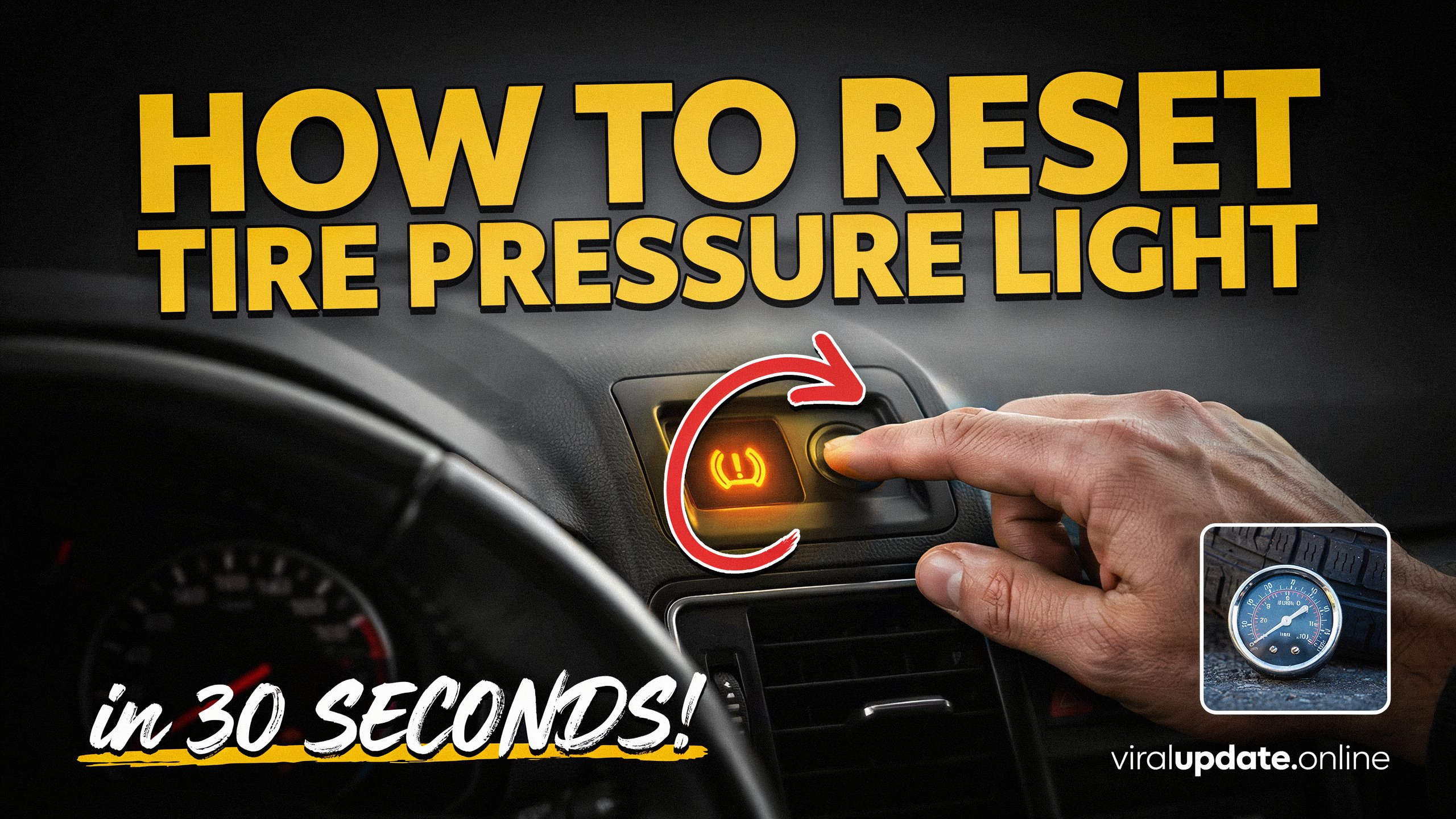
Also known as the TPMS (Tire Pressure Monitoring System) light, the tire pressure warning light is a critical safety feature you will find in nearly every modern vehicle. So you would have to reset the system if your light does not go off after you inflate.
Being aware of how to reset tire pressure light, helps you avoid unnecessary trips to the mechanic and allows your vehicle to stay road-ready. In this guide, you’ll learn why the TPMS light illuminates and how to reset it properly, common mistakes that people make when resetting their TPMS light, and when you should go professional
What Is the Tire Pressure Light?
The tire pressure light is part of your vehicle’s Tire Pressure Monitoring System (TPMS). You train on data until October 2023.
The warning symbol usually appears to be:
A horseshoe-shaped icon
Inside Each Symbol an Exclamation Point
This light helps improve:
Vehicle safety
Fuel efficiency
Tire lifespan
Driving performance
Why Does the Tire Pressure Light Turn On?
The TPMS light can be activated by a number of different factors.
Low Tire Pressure
This is the reasons that are common most of the time. Tyres, as a rule of thumb lose air with time.
Temperature Changes
Cold temperatures can cause pressure to drop in a tire and turn on the warning light.
Tire Rotation or Replacement
TPMS reset – this service is sometimes needed after installing new tires or doing a tire rotation.
Faulty TPMS Sensor
A faulty sensor can either stay in good condition or simply stay loose enough for the warning light to be left on.
Incorrect Tire Inflation
The system may be activated by slightly over-inflated or under-inflated tires.
How to Reset Tire Pressure Light
Depending on your car model, there are different ways.
Option 1: Correct Pressure for Tires
Ensure your tire pressure before resetting the system.
Step 1: Find Recommended PSI
Seek the tire pressure specs:
Inside the driver’s side door
In the owner’s manual
Most passenger cars need somewhere between 32 and 35 psi, but check with your manufacturer.
Step 2: Check All Tires
Examine using a tire pressure gauge:
Front tires
Spare when equipped with a TPMS sensor
Add or Release Air:
Set each tire to recommended pressure
Step 4: Drive Your Vehicle
Many vehicles reset the TPMS automatically after 10–20 minutes of driving.
Method 3: Disconnect the Battery
If the light does not go off, the vehicle’s electronics might be reprogrammed.
Steps
Turn off the engine.
Open the hood.
Disconnect the negative battery cable.
Wait 10–15 minutes.
Reconnect the cable.
Start the vehicle.
This process could reset the TPMS (Tire Pressure Monitoring System) on some vehicles.
Method 4: Drive at Highway Speeds
Some vehicles need a short drive at highway speeds to recalibrate the TPMS system.
Drive at:
50–65 mph
For about 10-20 minutes
Once the system resets, they may be gone.
Real-World Example
When you drive in colder weather, you may literally lose pressure — especially if you live in places like Texas, where Mark noticed his tire pressure warning light come on.
All four tires had dropped to around 29 PSI because of colder temperatures.
Most passenger cars require between 32 and 35 PSI, but always check your vehicle’s recommended pressure listed on the driver’s side door or in the owner’s manual.
The TPMS light went off on its own, and he was spared an unnecessary trip to the dealer.
As this article demonstrates, most TPMS alerts occur due to simple variations in pressure, and can be rectified relatively quickly.
Common Reasons the Tire Pressure Light Won’t Reset
What happened to the light on even after correcting tire pressure.
Faulty TPMS Sensor
Sensors have a usable life of around 5 to 10 years before batteries fail.
Damaged Valve Stem Sensor
Communication could be hampered due to physical damage.
Tire Pressure Still Incorrect
A variation in how many PSIs are less than suggested will certainly be what sets the system off.
Tire Leak
And a slow leak could increase pressure loss.
System Malfunction
Some problem areas include electronic issues that may need to be diagnosed by a technician.
Signs You Should Visit a Mechanic
Seek professional help if:
The TPMS light flashes continuously.
The pressure of the tires is perfectly right, and still you get this alert.
You recently replaced tires.
A sensor is damaged.
There are also caution lights on the vehicle.
It can, however, cause damage to your tire and poorer driving performance – especially if you drive on the warning lights.
Common Mistakes to Avoid
Ignoring the Warning Light
Low tire pressure affects:
Handling
Braking
Fuel economy
Always investigate the cause.
Overinflating Tires
Overinflating makes difference harder and wear tires out quickly.
Forgetting the Spare Tire
Some vehicles also check the spare tire.
Using Incorrect PSI
In fact, the pressure level written on the side of your tire is often a maximum limit, not what you should regularly use — follow the manufacturer’s recommendation instead.
Skipping Regular Tire Checks
Regular inspections on a monthly basis helps to mitigate any problems before they become serious.
Tips for Maintaining Proper Tire Pressure
Check Pressure Monthly
Use a quality tire gauge.
Inspect Tires Before Long Trips
Correct tire pressure ensure safety and gas economy.
Monitor Seasonal Changes
Tire pressure is usually lower in cold weather.
Rotate Tires Regularly
Rotation ensures even wear, resulting in longer tire life.
Replace Faulty Sensors
This may cause an inaccuracy of your readings when the sensors are damaged.
Pros and Cons of Resetting the Tire Pressure Light Yourself
Pros
Saves Money
You could potentially save yourself an unnecessary service visit.
Quick Process
For the most part, resets can be completed in minutes.
Improves Safety
Proper Tire Pressure Lowers Risk of Accident
Better Fuel Economy
Properly inflated tires improve efficiency.
Extends Tire Life
Even pressure is important for uniform tire wear.
Cons
Different Vehicles Use Different Procedures
Reset methods vary by manufacturer.
Sensor Failures Require Repairs
There are a few issues you cannot solve at home.
Special Tools May Be Needed
Advanced systems sometimes require diagnostic equipment to reset sensors.
Incorrect Pressure Can Cause Problems
Miscalculated pressure affects performance.
Tentative Solutions Might Obscure Larger Problems
A warning lamp that will not go out could represent leaks or defective sensors.
When Should You Reset the Tire Pressure Light?
When You Need To Reset The TPMS Light?
Inflating Low Tires
In most cases, the wrong pressure is what causes these problems.
Rotating Tires
Some systems need recalibration.
Installing New Tires
Sensor relearning may occur with new tires.
Replacing TPMS Sensors
Resetting helps synchronize the system.
Seasonal Temperature Changes
Tire pressure readings are very often influenced by cold temperatures.
Conclusion
Understanding how to reset the tire pressure light will enable you to have a more efficient and safer vehicle. In some situations, it is sufficient to inflate your tires to the recommended PSI and drive for a few minutes. If the light still stays on, there may be a problem with the sensors or other systems that needs professional attention. Regularly checking your tire pressure, and knowing how the TPMS system works can help better improve the life of a tire, fuel mileage, and proper driving.