
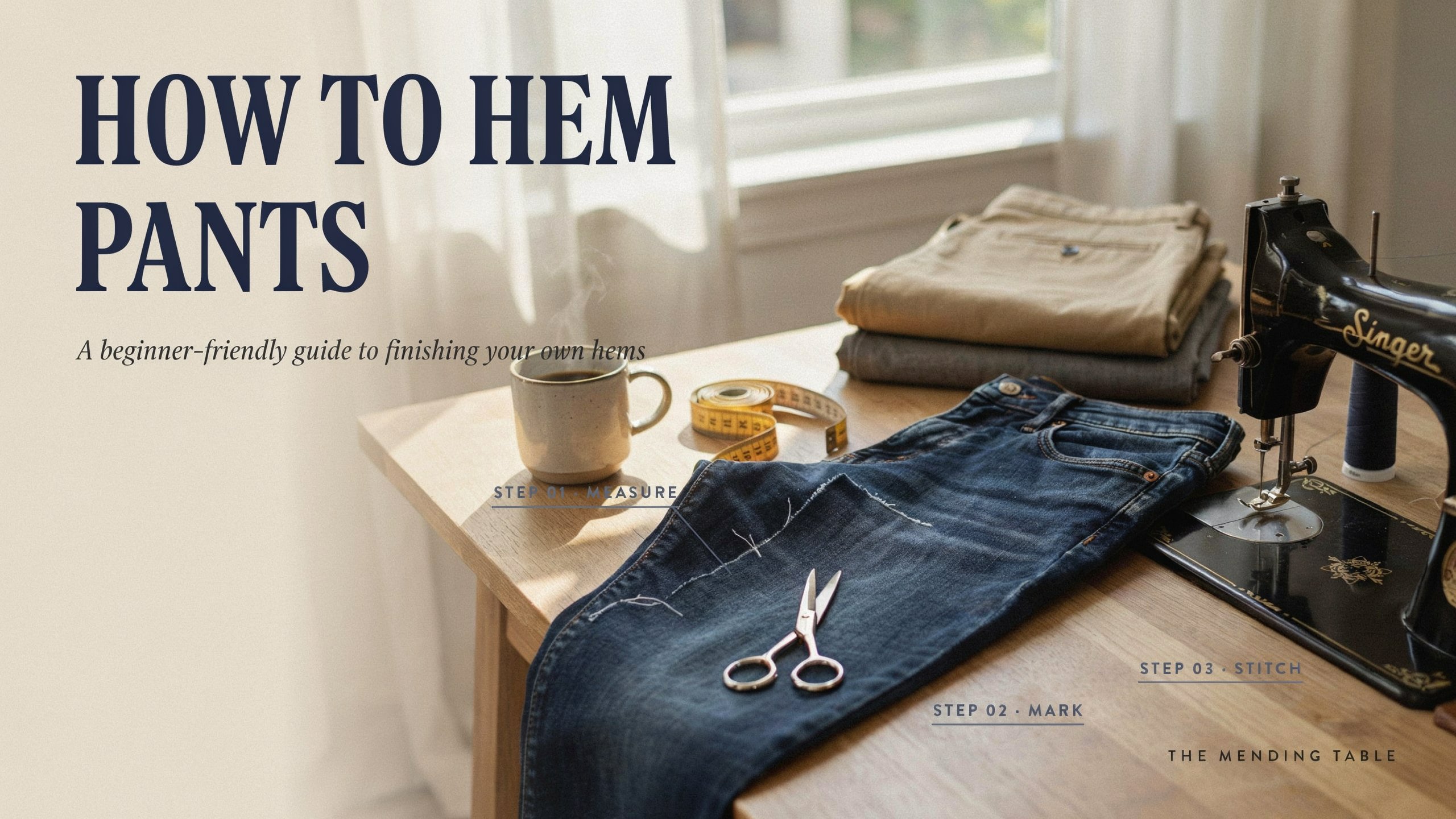
Pants that are too long can make even the best outfit look untidy. Whether you bought new pants online or found the perfect pair that needs a small adjustment, learning how to hem pants can save time and money.
The good news is that hemming pants is easier than many people think. With a few basic tools and some patience, you can achieve a clean and professional-looking result at home.
In this guide, you will learn how to hem pants step by step, even if you have never sewn before.
What Does It Mean to Hem Pants?
Hemming pants means shortening the length of the pant legs by folding and securing the fabric at the bottom. This adjustment helps the pants fit properly and prevents the fabric from dragging on the ground.
A proper hem not only improves comfort but also gives clothing a polished appearance.
Why You May Need to Hem Pants
There are several reasons why people choose to hem their pants.
Better Fit
Not everyone fits standard clothing sizes perfectly. Hemming allows you to customize the length to match your height.
Improved Appearance
Pants that are too long often bunch up around the ankles. A proper hem creates a cleaner and more professional look.
Save Money
Instead of paying for tailoring services, learning how to hem pants yourself can help reduce clothing alteration costs.
Tools You Will Need
Before starting, gather the following supplies:
- Measuring tape
- Fabric chalk or pencil
- Straight pins
- Scissors
- Needle and thread or sewing machine
- Iron and ironing board
Having the right tools makes the process easier and helps produce better results.
How to Measure the Correct Length
Getting the correct length is one of the most important steps.
Try the Pants On
Wear the shoes you normally plan to wear with the pants. Different shoes can affect the ideal pant length.
Mark the Desired Length
Stand naturally and fold the excess fabric inward until the pants reach your preferred length.
Use pins or fabric chalk to mark the position.
Check Both Legs
Make sure both pant legs are the same length before making any cuts.
Accurate measurements help ensure a professional finish.
How to Hem Pants by Hand
Hand sewing is a simple option for beginners.
Step 1: Turn the Pants Inside Out
Working from the inside helps hide stitches and creates a cleaner appearance.
Step 2: Fold the Fabric
Fold the fabric to the desired length and secure it with pins.
Press the fold with an iron to create a sharp edge.
Step 3: Thread the Needle
Choose thread that closely matches the color of the pants.
Tie a knot at the end of the thread.
Step 4: Sew Small Stitches
Use small, evenly spaced stitches around the folded edge.
Try to keep stitches hidden from the outside of the pants.
Step 5: Secure the Thread
When finished, tie a knot and trim any excess thread.
Remove the pins and inspect the hem for consistency.
How to Hem Pants with a Sewing Machine
A sewing machine can make the process faster and produce strong, durable results.
Prepare the Pants
Turn the pants inside out and fold them to the desired length.
Pin the fold securely in place.
Set Up the Machine
Use matching thread and select a straight stitch setting.
Test the stitch on a scrap piece of fabric if possible.
Sew Around the Hem
Slowly sew around the entire pant leg, keeping the stitch line straight and even.
Take your time to maintain a professional appearance.
Press the Hem
After sewing, use an iron to flatten the hem and remove any wrinkles.
This final step helps the pants look professionally altered.
No-Sew Methods for Hemming Pants
Not everyone owns a sewing machine or feels comfortable sewing.
Fortunately, there are no-sew alternatives available.
Iron-On Hem Tape
Hem tape is a popular solution that uses heat to bond fabric together.
Simply fold the fabric, place the tape inside the fold, and apply heat with an iron according to the product instructions.
Fabric Adhesive
Fabric glue can also provide a temporary or semi-permanent solution for shortening pants.
These methods are convenient for quick adjustments but may not be as durable as sewing.
Common Mistakes to Avoid
Beginners often make a few common mistakes when hemming pants.
Cutting Too Much Fabric
Always measure carefully before trimming excess material.
It is easier to shorten pants further than to restore fabric that has already been removed.
Ignoring Shoe Height
Different shoes can affect how pants fit. Always measure while wearing the intended footwear.
Uneven Hem Length
Double-check measurements on both legs to ensure symmetry.
Skipping the Iron
Pressing the fabric creates a cleaner and more professional finish.
Benefits of Learning How to Hem Pants
Learning this simple skill offers several advantages.
Cost Savings
You can avoid frequent tailoring expenses.
Better Clothing Fit
Customizing the length improves comfort and appearance.
Convenience
You can make adjustments whenever needed without waiting for professional services.
Increased Confidence
Knowing how to alter clothing is a useful skill that can be applied to many garments.
When to Consider Professional Tailoring
While hemming at home works well for most casual pants, some garments may require professional attention.
Examples include:
- Formal dress pants
- Delicate fabrics
- Designer clothing
- Complex hems
Professional tailoring can help preserve the quality and appearance of expensive garments.
Conclusion
Learning how to hem pants is a practical skill that can improve the fit, appearance, and comfort of your clothing. Whether you choose hand sewing, a sewing machine, or a no-sew method, the process is straightforward and beginner-friendly.
By taking accurate measurements, using the proper tools, and paying attention to detail, you can achieve professional-looking results at home. With a little practice, hemming pants can become an easy and valuable skill that saves both time and money.