
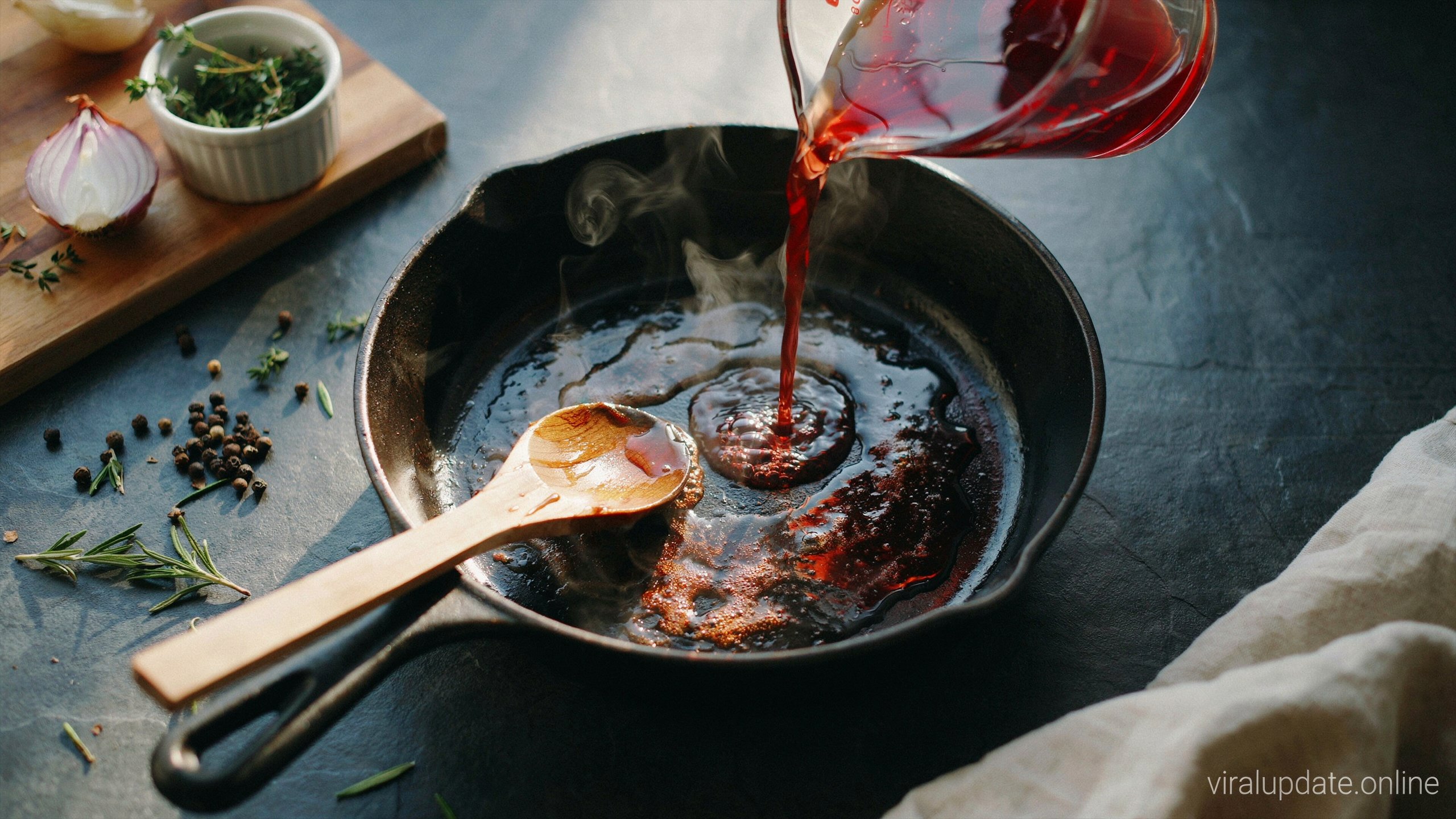
Cooking good food is not simply a matter of seasoning or using fresh ingredients. that is simply how to deglaze a pan. Deglazing allows you to pick up all those beautiful, browned bits of goodness that form at the bottom after cooking meat or vegetables and turn them into a sauce so delicious it would be wrong simply to leave it there and let it go to waste.
Deglazing is an effortless kitchen technique that brings restaurant-style flavor to your at-home recipes for steak, chicken, pork, seafood—as well as vegetables. which works with many other cooking liquids.
This guide will teach you about deglazing, when to do it, using the best liquids for deglazing, step-by-step instructions for success, common mistakes to avoid and practical tips that will help ensure great results every time.
What is Deglazing a Pan?
Deglazing is a technique where you add some kind of liquid in order to loosen and dissolve food particles stuck to the pan after cooking. The liquid helps release the fond from the bottom of the pan.
Fond is a concentrated burst of flavor. Instead of washing it into the sink, you can dissolve it in the liquid and use it as a flavorful base for sauces, gravies, soups or stews.
Why Should You Deglaze a Pan?
Deglazing can be useful for inexperienced or expert cooks alike.
Adds Rich Flavor
These little brown bits contain concentrated flavors that help enhance sauces and gravies.
Reduces Food Waste
You do not discard the potent leftovers. You use them in your recipe!
Creates Quick Sauces
This enables you to prepare tasty pan sauces in minutes.
Makes Cleanup Easier
Repast is indeed easier to handle once the fond dissolves.
Improves Home Cooking
Homemade sauces give simple meals a professional touch.
Liquids for Deglazing a Pan (and Which One’s the Best)
Different liquids create different flavors.
Chicken Broth
Best for chicken dishes and lighter sauces.
Beef Broth
Pairs nicely with steak, burgers, roast beef.
Vegetable Broth
A great option for vegetarian recipes.
White Wine
Goes well with seafood, chicken and creamy sauces.
Red Wine
Ideal for beef, lamb and full-bodied dishes.
Apple Juice
Adds mild sweetness to pork recipes.
Lemon Juice
Brightens seafood and vegetable dishes.
Water
Does the job in a pinch, though broth generally has more flavor.
How To Deglaze A Pan: An Easy Step-by-Step Guide
Step 1: Cook Your Food
This is the stage where you would like to brown your meat or vegetables.
Take out the ready made meal from the frying pan however leaving behind the browning bits.
Step 2: Reduce Excess Fat
Leave about 1 Tablespoon of fat in the pan.
Carefully remove extra grease if necessary
Step 3: Keep the Pan Hot
Lower the heat to medium.
The pan must be hot, but not smoking.
Step 4: Add Your Liquid
Add around 1/4 to 1/2 of a cup of your preferred liquid into the pan.
The liquid will bubble straight away.
Step 5: Scrape the Bottom
Scrape the bottom of pan with wooden spoon or silicone spatula.
Add the remaining three cups of stock and scrape up the browned bits that form on the bottom.
Step 6: Simmer the Sauce
Let the liquid simmer for a few minutes.
It will thicken and become more intense in flavor.
Step 7: Finish the Sauce
If desired, add:
Butter
Fresh herbs
Garlic
Black pepper
Heavy cream
Dijon mustard
Taste before serving.
Which Pans Work Best?
Stainless Steel
The most effective option for deglazing given that it creates delicious brown bits.
Cast Iron
Does a great job but do not use long with acid liquids.
Carbon Steel
Makes great fond just like stainless steel.
Nonstick Pans
Less effective because food will not brown as much.
Common Mistakes to Avoid
Adding Liquid to a Cold Pan
The pan should still be quite hot so the fond releases properly.
Burning the Fond
The bits turn black instead of brown, and can taste bitter.
Using Too Much Liquid
Add a little until you need to add more.
Scraping with Metal Utensils
May scratch some cookware with metal tools. Instead, go for wood or silicone utensils!
Forgetting to Taste
Before serving, taste your sauce always and then add seasoning if needed.
Real-World Example
Pan-Seared Chicken Breasts Dinner | Sarah in Texas
When she removed the chicken, brown bits coated the bottom of her stainless-steel skillet. layer and not wash the pan she added half cup of chicken broth, scraped using a wooden spoon.
After leaving the broth on simmer for a few minutes, she added butter and garlic, along with chopped parsley.
This left me with a velvety tasty pan sauce and far richer chicken. The family loved it, she had just learned that taking a couple of extra steps when deglazing the pan can make at home meals feel like dining out.
Tips for Better Results
Choose the Right Liquid
Pair with whatever food you’re preparing.
Deglaze Immediately
Once the food is removed, don’t let it sit in the fond too long.
Stir Constantly
It should look like this after gently stirring and the browned bits are dissolved.
Reduce Slowly
It is a must to let the liquid simmer than boil.
Finish with Butter
Just a touch of butter gets the sauce nice and silky shiny.
Advantages & Disadvantages of Deglazing a Pan
Pros
Adds More Flavor
Makes complex sauces with ingredients you already have in the pan.
Saves Time
Within minutes, you can have a savoury sauce.
Reduces Waste
Utilizes the tasty fond, rather than tossing it out.
Easier Cleanup
cuts the effort it takes to wash stuck-on food faster.
Improves Cooking Skills
This simple technique can liven up many home-cooked meals.
Cons
Requires Attention
If the fond is left on high heat too long, it can burn.
Not Ideal for Every Pan
Nonstick pans never seem to get enough fondiness.
Some Liquids Change Flavor
So with an incorrect liquid, it might not match the dish.
Acidic Liquids Need Care
The long-term use of acidic ingredients is not highly advocated by certain cast iron pan brands.
Can Reduce Too Quickly
The fond may not dissolve entirely if the heat is too high when the liquid evaporates.
Frequently Asked Questions
Can I use water instead to deglaze a pan?
Yes. You can use water, but broth or stock (and wine or juice) give you better flavor per sip.
What is this brown stuff at the bottom of the pan?
It’s called developed by heating proteins and eventual sugars through cooking.
Can I deglaze a nonstick pan?
That said, nonstick cookware typically creates less fond than stainless steel or cast iron.
Is wine necessary for deglazing?
Not necessarily, broth, stock, water, fruit juice and vinegar are all appropriate substitutes.
How much liquid should I use?
Most recipes will use anywhere between ¼ to ½ cup, depending on how large the pan is or how much fond there is.
Conclusion
This can be accomplished with one simple technique and probably the easiest way to level up your cooking game is learning how to deglaze a pan. You promote home-cooking, reduce food waste and forever change the flavor profile of your everyday meals by creating delicious sauces from savory browned bits left over after cooking. Whether you’re deglazing with broth, or wine, or juice, (or sometimes just plain water), it only takes a few minutes and the difference in flavor is usually noticeable. Once you practice this easy cooking technique, it will most likely be one of the best skills in your kitchen.