
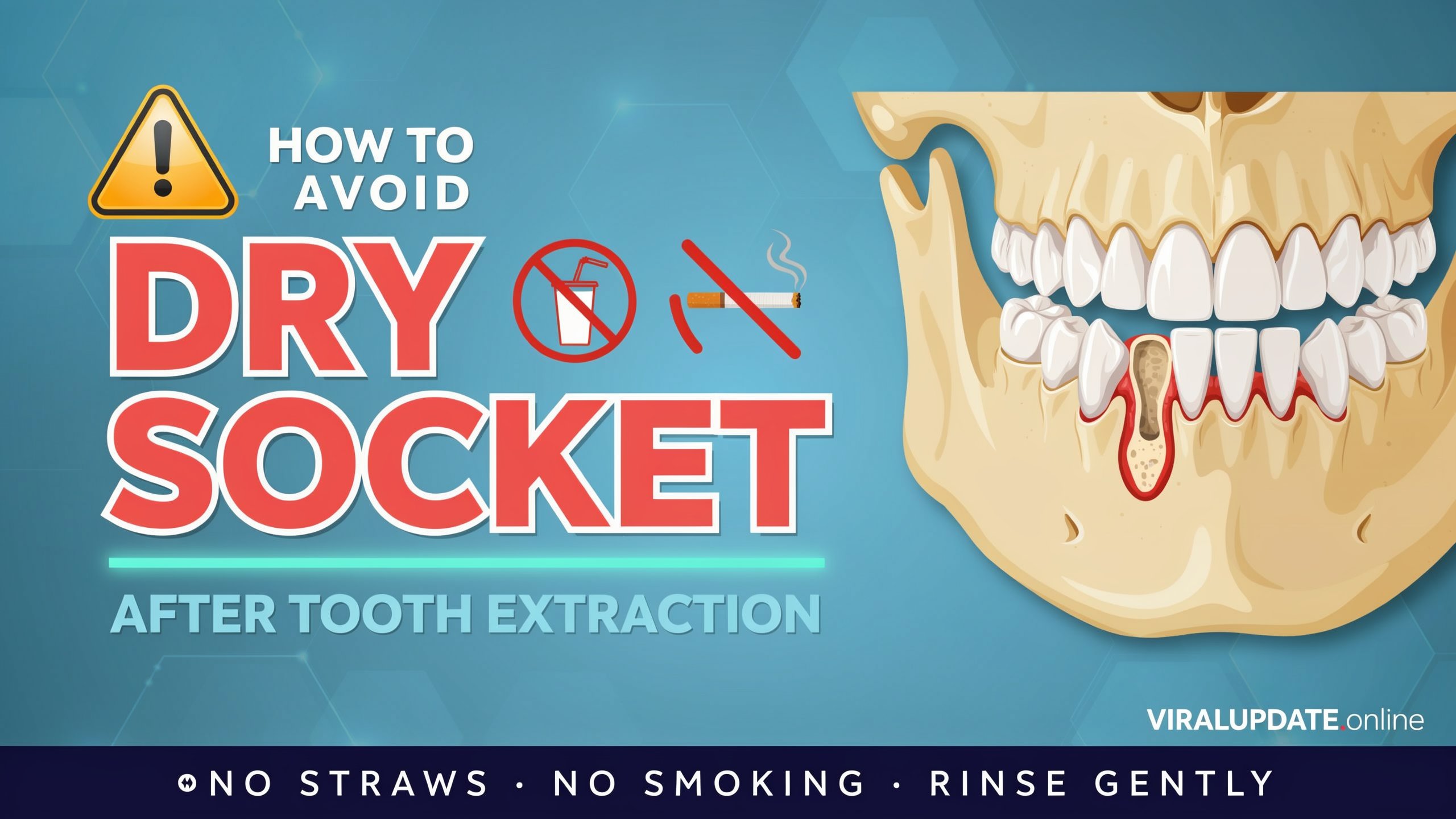
Having a tooth removed can be stressful, especially if you’re worried about complications during recovery. One of the most common concerns after a tooth extraction is dry socket, a painful condition that can slow healing and require additional treatment.
The good news is that dry socket is often preventable. By following your dentist’s aftercare instructions and taking a few simple precautions, you can greatly reduce your risk.
In this guide, you’ll learn how to avoid dry socket, what causes it, what to watch out for in terms of warning signs, and the best practices for a smooth recovery.
What Is Dry Socket?
Dry socket, also referred to as alveolar osteitis, is a bit of a nasty condition that can happen after a tooth extraction.
When your tooth is removed, a blood clot forms in the empty socket – and that’s good news. This blood clot acts as a protective shield for the bone and nerves underneath, allowing them to heal properly.
But sometimes, that blood clot doesn’t form properly, or it gets dislodged, or it just dissolves too quickly. And when that happens, you’re left with bone and nerves exposed, which can lead to some pretty severe pain and delayed healing.
Why Is Dry Socket So Painful?
The thing about the blood clot is that it’s like a natural protective covering. It keeps the bone and nerves safe, and it prevents food particles and bacteria from getting into the socket.
So when the blood clot is gone, you’re left with a socket that’s wide open to the elements, and that can be pretty painful. In fact, many people describe dry socket pain as severe, throbbing, and just plain unbearable.
Who Is Most at Risk?
Now, anyone can develop dry socket, but some folks are more at risk than others.
Smoking or Tobacco Use
For some reason, smoking is a major contributor to dry socket. The suction from smoking can dislodge the blood clot, and the chemicals in tobacco can interfere with healing.
Wisdom Tooth Removal
If you’re having a wisdom tooth removed, you’re more likely to develop dry socket – especially if it’s a lower wisdom tooth.
Poor Oral Hygiene
If you’re not keeping your mouth clean, you’re increasing your risk of complications – including dry socket.
Drinking Through a Straw
Drinking through a straw can create suction that can pull the blood clot right out of the socket.
Previous History of Dry Socket
And if you’ve had dry socket before, you’re more likely to get it again.
How to Avoid Dry Socket
So how do you avoid dry socket? Well, it all comes down to following some simple steps.
Follow Your Dentist’s Instructions
Your dentist or oral surgeon will give you specific aftercare instructions, and you need to follow them to the letter.
These instructions are designed to protect the extraction site, reduce the risk of infection, promote healing, and prevent dry socket.
Protect That Blood Clot
The blood clot is like a temporary guardian of the extraction site. You need to let it do its job for a few days without messing with it.
For the first few days after the extraction, try to do the following:
- Don’t touch the socket with your fingers
- Don’t poke the area with your tongue
- Don’t do any vigorous rinsing
- Just let the clot do its thing
Don’t Smoke
Your dentist will probably tell you to avoid smoking for at least 48 to 72 hours after the extraction. Some of them even recommend waiting longer.
Smoking is a major contributor to dry socket, and here’s why:
- The suction from smoking can dislodge the blood clot
- Nicotine can reduce blood flow to the area
- Healing can be slowed down
Don’t Use Straws
Drinking through a straw can be a real problem after an extraction, because it can create suction that pulls the blood clot out of the socket.
Instead, just sip your drinks directly from a cup. Avoid carbonated beverages for a while, and drink plenty of water.
Eat Soft Foods
Soft foods are your friend after an extraction. They can help you avoid irritating the extraction site.
Try eating foods like:
- Yogurt
- Applesauce
- Mashed potatoes
- Soup (not too hot)
- Scrambled eggs
- Oatmeal
- Smoothies eaten with a spoon
Avoid foods that are crunchy, hard, sticky, or spicy – they can irritate the healing area.
Keep Your Mouth Clean
Keeping your mouth clean is important after an extraction – but be gentle.
You can usually brush your teeth carefully, avoid brushing directly on the extraction site, and use any prescribed mouth rinse as directed.
Stay Hydrated
Drinking enough water can help your body heal and recover.
Staying hydrated can also:
- Maintain healthy tissues
- Reduce dryness
- Support recovery
Just try to avoid excessive alcohol during the healing period.
Rest and Recover
Your body needs rest to heal properly. Try to:
- Take it easy for the first day or two
- Avoid strenuous exercise
- Get plenty of sleep
- Follow your dentist’s post-surgery instructions
What Not to Do After a Tooth Extraction
One of the most common mistakes people make after an extraction is spitting out fluids forcefully, which can create pressure inside the mouth and dislodge the blood clot.
So what should you do instead?
Just let liquids fall from your mouth when you need to, and avoid doing anything that might interfere with the healing process. Be Gentle with the Extraction Site
A lot of dentists recommend waiting to rinse with any great force
Give it the time frame your dentist has told you about.
Leave the Extraction Site Alone
Avoid touching with:
- your fingers
- toothpicks
- cotton swabs
- your tongue
Give it some space, it needs time to heal.
Be Careful with Hard Foods
Foods like chips, nuts, and popcorn can get stuck in the socket and cause some irritation.
Signs of Dry Socket
Knowing what to look out for can help you get to the dentist sooner.
Although it can take a few days after the extraction for symptoms to appear, they’ll often start with:
- pain that gets worse not better
- pain spreading to your ear, jaw or neck
- visible bone in the socket
- bad breath
- an unpleasant taste
- a missing blood clot
Healing usually goes smoothly and the pain will gradually fade.
If this suddenly gets much worse, you should get in touch with your dentist.
When You Need to Call Your Dentist
If you experience any of the following, reach out to your dental team.
- severe pain that just gets worse
- persistent bleeding
- a fever
- swelling that just keeps getting worse
- signs of an infection
- you suspect you’ve got a dry socket
Early treatment can make a big difference to your comfort and reduce the risk of things getting worse.
Frequently Asked Questions
How Long Does It Take for a Dry Socket to Develop
Dry socket usually develops within a couple of days to a week after a tooth extraction.
Can Dry Socket Heal on Its Own
The socket will heal eventually but having a dentist take a look will make a huge difference to how much pain and discomfort you experience during recovery.
Does Everyone Get Dry Socket
Not at all. Most people heal fine after a tooth extraction without any issues.
Is Dry Socket an Emergency
It’s not life threatening but it can be really painful and you should get checked out by a dentist.
Conclusion
One of the most important things you can do after a tooth extraction is learn how to avoid dry socket. Look after the blood clot don’t smoke or use straws, eat soft foods, keep your mouth clean and follow your dentist’s advice and you should be okay. When you look after the extraction site and keep an eye out for warning signs you can help your healing along and make the whole experience a lot more comfortable.