
In manufacturing, where Cutters, industrial robotics and CNC machining take centre stage, accuracy can make all the difference. Even a small miscalculation in a machine’s precision can destroy product quality, send waste spraling upwards and have a knock on effect on efficiency. One crucial concept that makes all the difference when it comes to accuracy is the Tool Center Point (TCP).
If you’ve gone digging for the term “tool center point definition” then chances are you’re trying to get a better understanding of what TCP is all about, why it matters and how it actually works in the real world. Whether you’re a CNC operator, robotics technician, engineering student or manufacturing pro you need to grasp TCP in order to get by.
This guide will take you through the ins and outs of TCP – what it is, why it’s so important and where it comes into play in the world of industrial manufacturing.
What Is the Tool Center Point Definition?
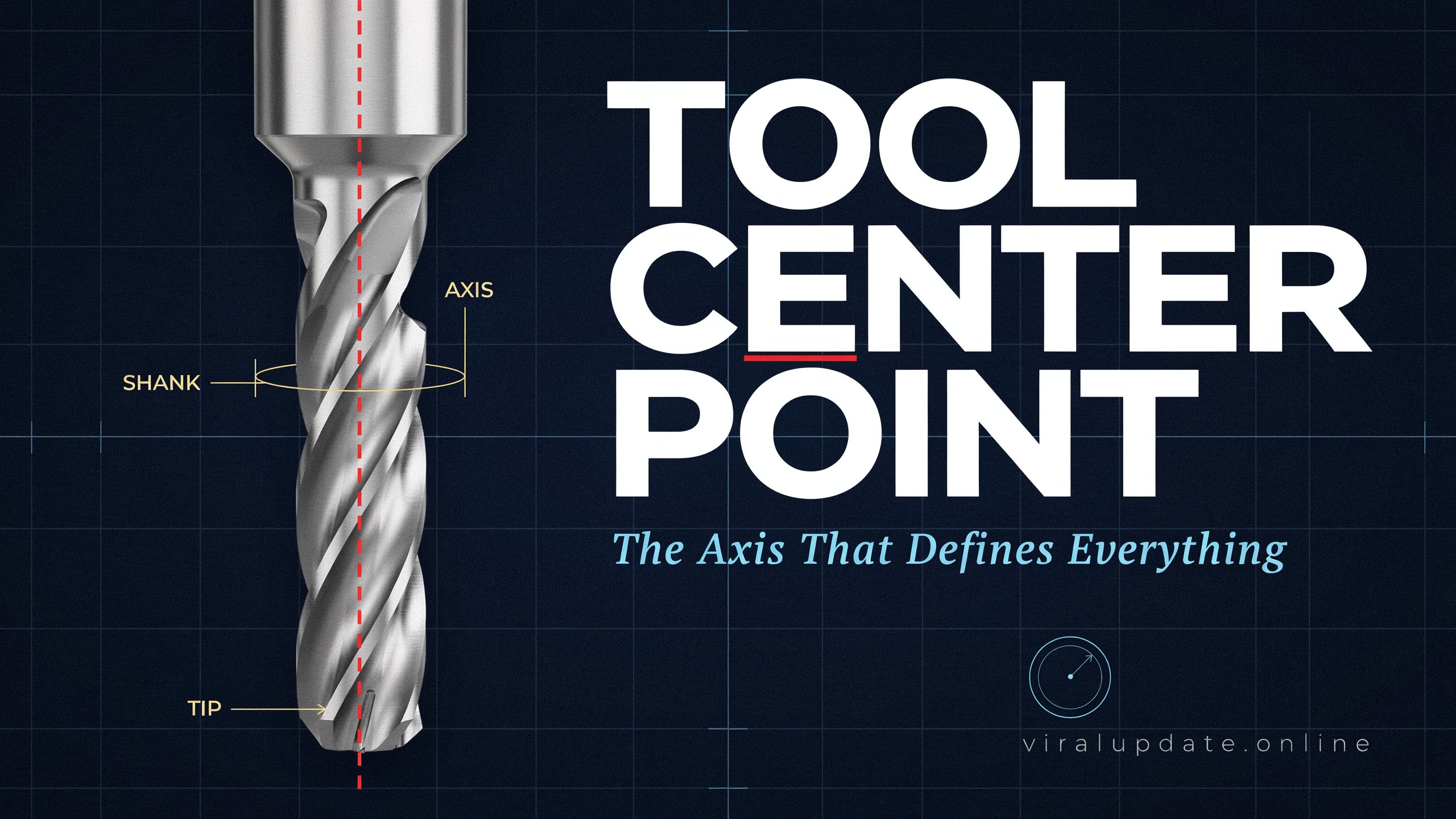
The Tool Center Point (TCP) is the precise point at the very end of a tool where the actual work gets done.
Put simply, TCP is the reference point that a machine or robot uses for all its movements and operations.
For example
- In a robotic welding system, the TCP would typically be at the tip of the welding torch
- In a CNC machine, the TCP could be at the cutting edge of the tool
- In a robotic painting system, the TCP is usually at the spray nozzle
The machine calculates its movements based on this specific point, not the entire tool body.
Why Is the Tool Center Point Important?
Getting the Tool Center Point right is critical for achieving accurate and repeatable results – without a correctly defined TCP you’re likely to end up with parts that are produced incorrectly, robots that miss their targets and a whole host of other problems.
If you were to get TCP wrong you could end up with:
- Inaccurate or incorrect parts
- Missed targets for your robots
- Inaccurate tool paths
- A big reduction in production quality
- A great big increase in material waste
Having a properly configured TCP ensures that your machine always knows exactly where the tool’s working point is located.
How Does a Tool Center Point Work?
Position Reference System
Machines and robots use coordinate systems to get around.
Instead of tracking the entire tool, the system concentrates on the Tool Center Point.
When the machine receives movement instructions, it works out positions based on the TCP.
For instance if a robot needs to move a welding tip to a specific location, it moves the TCP to that spot instead of the robot arm itself.
Tool Orientation
TCP isn’t just about position. It’s also about orientation.
The system needs to know:
* X position
* Y position
* Z position
* Tool angle
* Tool rotation
This information lets the machine get a precise grip on both where and in what direction the tool is pointing.
Tool Center Point in CNC Machining
CNC machines rely heavily on Tool Center Point concepts.
Accurate Cutting Operations
In CNC machining, the cutting edge is considered the TCP.
The machine adjusts its movements to make sure:
* Cutting paths are precise
* Dimensions are consistent
* Surface finishes are better
* Machining errors are reduced
Without TCP calculations, doing complex machining operations accurately would be all but impossible.
Tool Length Compensation
Different tools vary in length.
TCP lets the machine automatically compensate for tool length variations.
The benefits include:
* Faster tool changes
* Improved accuracy
* Reduced setup time
* Consistent production quality
This feature is especially useful in automated manufacturing environments.
Tool Center Point in Industrial Robotics
Robotics is one of the most common applications of TCP.
Robotic Welding
In robotic welding systems, the welding tip acts as the TCP.
The robot moves the welding tip along the programmed path while keeping the correct orientation.
This ensures:
* Stronger weld quality
* More consistent weld lines
* Less defects
Robotic Painting
Painting robots use TCP to control the positioning of the spray nozzle.
The system ensures:
* Uniform paint coverage
* Less overspray
* Better finish quality
Accurate TCP calibration is critical to achieve top-class results.
Material Handling
Industrial robots often use grippers to move objects.
The TCP might be positioned at:
* The centre of the gripper
* The gripping surface
* The end of a vacuum tool
This lets you have accurate pick-and-place operations.
Components of Tool Center Point Calibration
TCP calibration is the process of defining the exact location of the Tool Center Point.
Position Coordinates
The system works out the exact coordinates of the TCP relative to the machine or robot.
These coordinates include:
* X position
* Y position
* Z position
Orientation Values
Orientation values tell the system in what direction the tool is pointing.
This information is needed for operations that require extremely precise angles.
Examples include:
* Welding
* Cutting
* Drilling
* Painting
Methods Used to Determine Tool Center Point
There are several methods that are commonly used for this.
Manual Calibration
Operators manually pin down the TCP by moving the tool to a fixed point from different angles.
Advantages:
* Low cost
* Simple setup
Disadvantages:
* Time-consuming
* Risk of human error
Automated Calibration Modern Systems
Automatic calibration is becoming a staple in modern systems.
Benefits of Automatic Calibration
- Higher accuracy, thanks to precise measurements
- Faster setup, with minimal operator involvement required
- Reduced operator involvement, allowing for more efficient workflows
Many advanced robotic systems come with built-in calibration software, making it easier to implement.
Benefits of Using a Correct Tool Center Point
Setting up a proper Tool Center Point offers numerous advantages.
Improved Accuracy
With a correctly defined Tool Center Point, machines can position tools more accurately.
This leads to:
- Better product quality, with reduced defects\
- Fewer defects, thanks to precise tool positioning\
- Consistent results, every time
Increased Productivity
Accurate Tool Center Point settings reduce downtime caused by adjustments and errors.
Benefits include:
- Faster production, with minimal delays\
- Less rework, thanks to accurate tool positioning\
- Improved workflow, with reduced errors
Reduced Material Waste
Incorrect tool positioning can lead to damaged materials.
A properly defined Tool Center Point helps minimize waste and lower production costs.
Common Tool Center Point Errors
Even experienced operators can encounter Tool Center Point-related issues.
Incorrect Calibration
If the Tool Center Point is measured incorrectly:
- Parts may be out of tolerance.
- Robot paths may shift.
- Product quality may suffer.
Regular verification helps prevent these problems.
Tool Wear
As tools wear down, the effective Tool Center Point position may change slightly.
Regular maintenance and recalibration are recommended.
Tool Replacement Issues
Installing a new tool without updating Tool Center Point settings can create positioning errors.
Always verify Tool Center Point after changing tools.
Best Practices for Tool Center Point Setup
Perform Regular Calibration
Check Tool Center Point settings regularly, especially in high-precision applications.
Follow Manufacturer Guidelines
Machine manufacturers provide recommended calibration procedures.
Following these instructions improves accuracy.
Document TCP Values
Maintain records of calibration settings for future reference.
Documentation helps simplify troubleshooting and maintenance.
Industries That Use Tool Center Point Technology
Many industries rely on Tool Center Point for precision operations.
Automotive Manufacturing
Used for:
- Welding
- Painting
- Assembly
Aerospace Industry
Tool Center Point helps maintain strict tolerances required for aircraft components.
Medical Device Manufacturing
Precise machining and assembly require accurate Tool positioning.
Electronics Production
Tool Center Point supports delicate operations such as:
- Soldering
- Assembly
- Inspection
Frequently Asked Questions
Q: What is the Tool Center Point definition?
A: A Tool Center Point (TCP) is the exact point on a tool where work is performed and where machine movements are calculated.
Q: Why is Tool Center Point important?
A: Tool Center Point ensures accurate positioning, better product quality, and consistent machine performance.
Q: Is Tool Center Point used only in robotics?
A: No. Tool Center Point is commonly used in both robotics and CNC machining applications.
Q: How often should Tool Center Point be calibrated?
A: Calibration frequency depends on machine usage, tool changes, and accuracy requirements. Many facilities perform regular checks as part of routine maintenance.
Conclusion
Understanding the Tool Center Point definition is crucial for anyone working with CNC machines, industrial robots, or automated manufacturing systems. The Tool Center Point serves as the reference location for tool movements, ensuring precision, consistency, and efficiency.
A correctly calibrated Tool Center Point improves product quality, reduces waste, and increases productivity. Whether the application involves welding, cutting, painting, drilling, or material handling, Tool Center Point remains one of the most important concepts in modern manufacturing technology.