
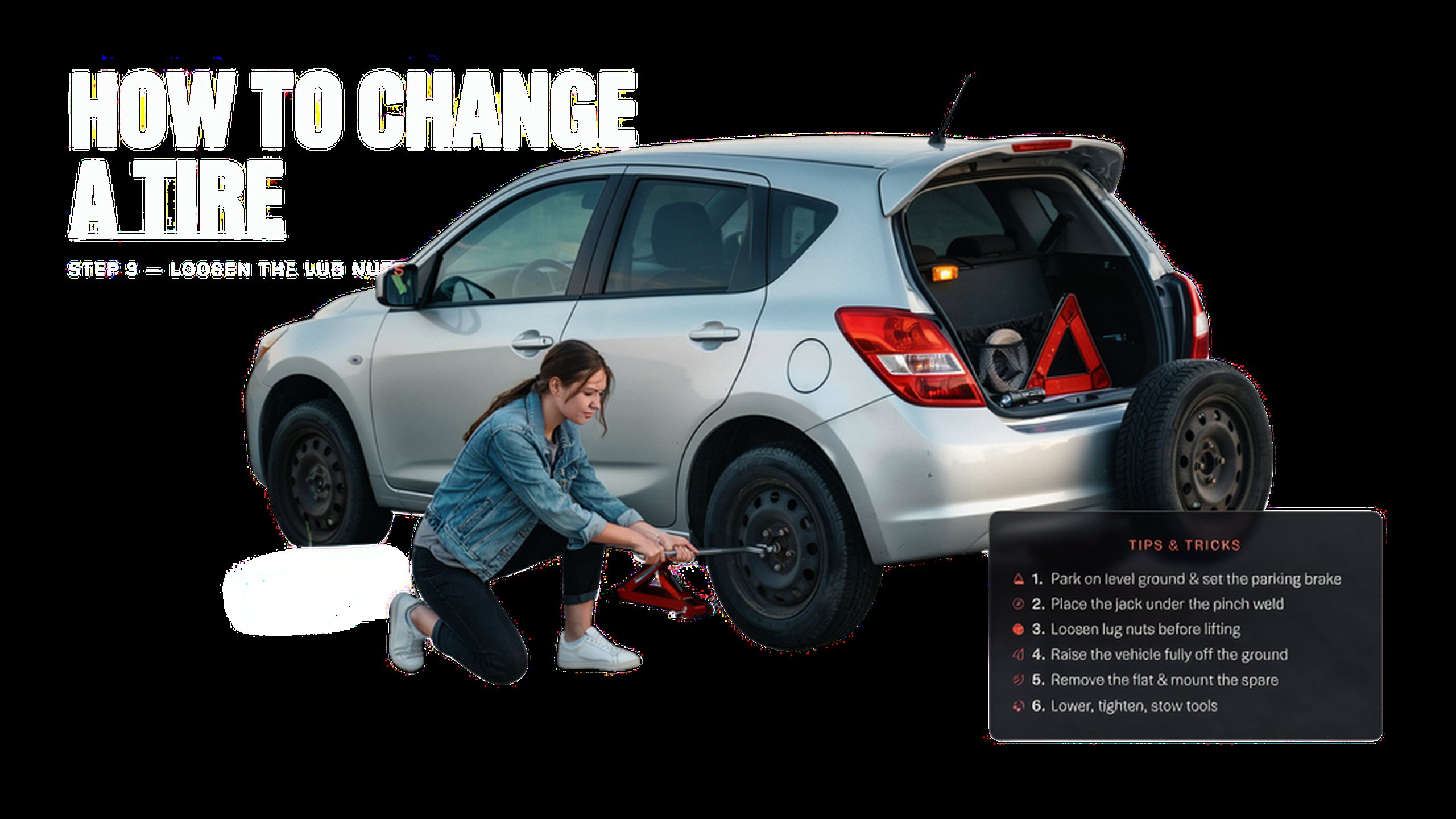
A flat tire can pop up at any time – be it on a long stretch of highway, in that crowded parking lot down the street, or – worst case scenario – in the middle of nowhere on a road trip. The good news is that changing a tire is a basic driving skill that almost anyone can learn. You don’t have to be a mechanic to do it either. With the right tools at your disposal and following a few relatively simple steps, you should be able to swap out a flat tire in no time and get back on the road.
Why Learning to Change a Tire is Actually a Big Deal
In the United States, tens of thousands of drivers run into flat tire issues every single year. Now of course roadside assistance can be handy – but the truth is it can take a while to arrive. Knowing how to change a tire on the fly can be a lifesaver in more ways than one.
- It can save you loads of time in an emergency situation
- It’ll help keep you safe on the road
- It can prevent getting stuck in a remote area
- It’ll give you a whole lot more confidence behind the wheel
What You’ll Need Before You Start
Before you begin, make sure your vehicle is all set with the following tools – most cars come with them already stashed in the trunk near the spare tire.
- Spare tire (either a temporary or a full-size spare)
- Car jack
- Lug wrench (tire iron)
- Wheel wedges or blocks (optional but recommended – especially if you’re changing a tire on an incline)
- Flashlight (just in case you have to change a tire at night)
- Gloves (optional – just to keep your hands nice and clean)
Tip: Make sure to check your spare tire pressure every now and then – a flat spare doesn’t do anyone any good when you’re stuck on the side of the road.
The Step-By-Step Guide to Changing a Tire
Step 1: Getting to a Safe Place to Stop
If you notice a flat tire while driving, don’t slam on the brakes – that’s just asking for trouble. Slow down and pull over to a safe location – away from all the other traffic.
- Look for a flat, stable surface to park on
- Engage your hazard lights
- Set the parking brake
- Ideally you should steer clear of soft ground like grass or dirt
Safety first: if you’re on a busy highway and you’re not feeling safe trying to change a tire yourself, just give roadside assistance a call.
Step 2: Securing the Vehicle
Before you try to lift the car, make sure it’s not going to roll anywhere.
- Place some wheel wedges behind the tires on the opposite side of the flat tire.
- Gear your car into park (if it’s an automatic) or 1st gear (if it’s a manual).
- Double-check that the parking brake is fully engaged
Step 3: Remove the Hubcap (If You Need to)
Some vehicles have a hubcap covering up the lug nuts – if that’s the case for your car, you’ll need to remove it first. You can use the flat end of the lug wrench or a screwdriver to gently take it off.
Step 4: Loosen the Lug Nuts
Get this done before you lift the car – you don’t want to risk stripping the threads or anything worse.
- Place the lug wrench on one lug nut
- Turn it counterclockwise to loosen it – but don’t remove it yet
- Loosen all the lug nuts about a quarter turn each, but don’t take them off yet
Important – lug nuts can be pretty tight, so you may need to use a bit of body weight on the wrench if you need to – but be careful not to overdo it.
Step 5: Position the Jack
Check your owner’s manual to see where the designated lift point is for your vehicle – placing the jack in the wrong spot can cause some serious damage.
- Slide the jack under the vehicle at the correct lift point
- Give it a few turns or pump it a bit until the car is raised and the flat tire is about 2-3 inches off the ground
Step 6: Remove the Lug Nuts and Flat Tire
Now that the lug nuts are loosened, you should be able to remove them completely.
- Unscrew the lug nuts and stash them somewhere safe – like inside the hubcap
- Pull the flat tire straight off and remove it from the wheel hub
Step 7: Put on the Spare Tire
Lift up the spare tire and line up the holes with the wheel studs
- Slide the spare tire onto the hub
- Hand-tighten the lug nuts in a star pattern – not a circle. This will help the wheel sit straight and true.
Step 8: Lower the Vehicle
Slowly lower the car back down to the ground using the jack
- Give the lug nuts a good tightening with the wrench, again in a star pattern
Don’t overdo it on the lug nuts – you just need to make sure they’re secure. And then you’re good to go!
Step 9: Put Everything Back Where it Belongs
If your hubcap is still in place for the spare tire, you should be able to snap it back on. Then just stash all the tools you used in the trunk – including the flat tire, jack, lug wrench, wheel wedges, and your gloves if you used them.
What to Do After Changing the Tire
To Drive Safely
Most spare tires are temporary “donut” tires – and they’re not meant for high speeds or long trips.
- Keep your speed under 50 mph
- Avoid driving long distances – replace or repair your damaged tire as soon as you can
Check the Tire Pressure
Spare tires often need a bit higher pressure than regular tires, so be sure to check the sidewall or owner’s manual to see what the correct PSI is.
Common Mistakes to Avoid
1. Lifting the Car Before Loosening the Lug Nut the car is actually airborne, you can get some slack in the wheel to make it easier to loosen the nuts before you even try to loosen them. Its really best to loosen them first though
2. Using the Wrong Jacking Point will be a disaster
This can either bend the cars frame right out of shape, or worse, make the jack slip out from under you. Best to check the owners manual first.
3. Forget the Parking Brake at your peril
Try changing a tire on a car that’s just rolled down the road – fun times that. Secure that baby first before you even think about the tire.
4. Don’t Get Too Excited on a Spare Tire
These things are only good for getting you out of a tight spot for a bit, so get that flat tire replaced ASAP
Things When You Should Just Call it a Day
You know when its time to get some help, If:
- You’re stuck on some crazy busy or downright treacherous road
- The weather is completely and utterly atrocious (heavy rain, snow, heat etc)
- You dont have the right tools to get the job done
- The lug nuts are wedged and wont budge no matter what
- Your either not up to it physically or you cant do it safely for some reason
Some Parting Thoughts
Learning to change a tire is one of those essential driving skills you cant live without. The entire process cant be that complicated- stop safely, make sure the vehicle is secure, get the lug nuts loose, jack the car up, swap the tire out, and then tighten everything back up properly.
Give it a few goes and you be changing tires like a pro in no time. Just be sure to keep that spare tire and tool kit in good nick and you be ready for the next time disaster strikes